
Uber at US airports: how pickups actually work and what to expect
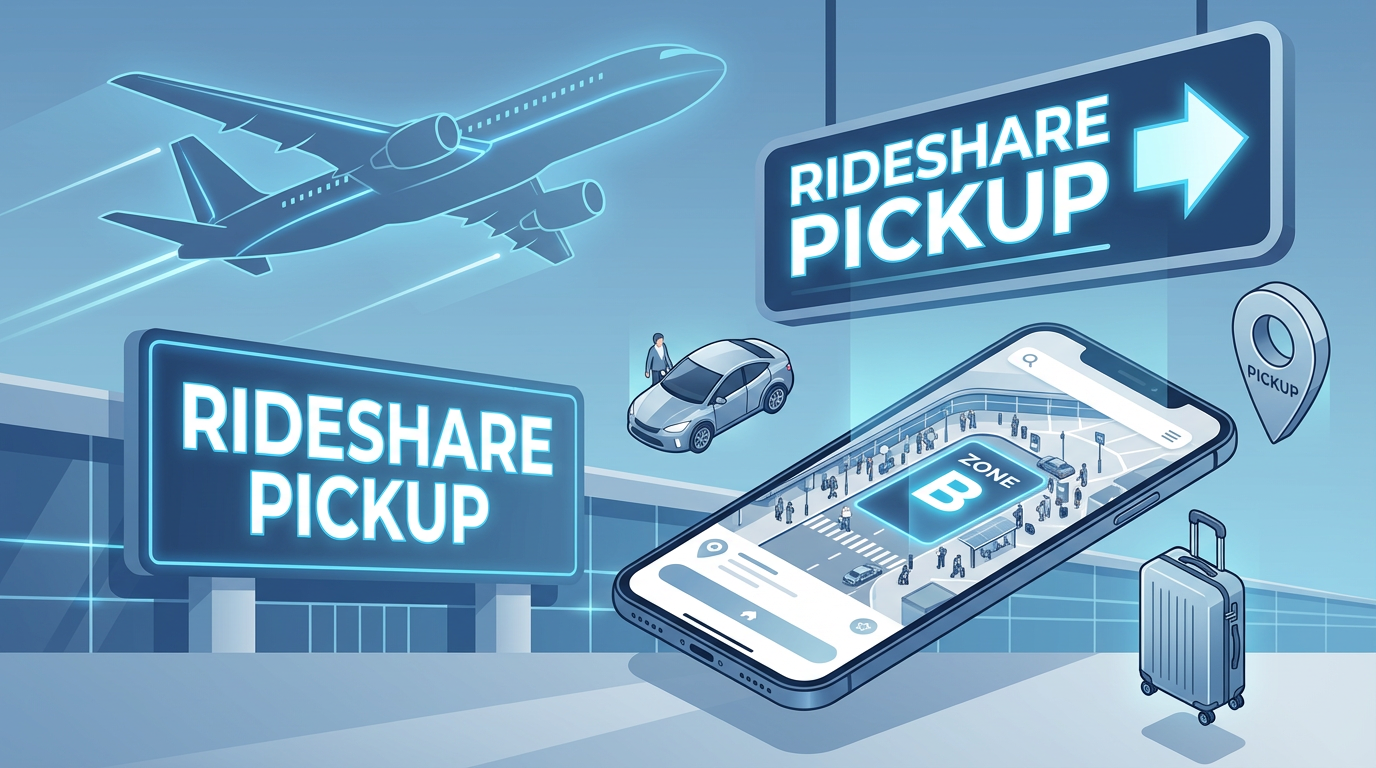
Using Uber at an airport should be simple, but the reality involves designated pickup zones, terminal-specific procedures, and timing decisions that can mean the difference between a smooth exit and standing on a curb in the heat for 15 minutes wondering where your driver is. This guide covers how airport Uber pickups work in general, what to do at the major US airports, and the practical details that save you time and frustration.
Why airport Uber pickups are different
At most non-airport locations, you request a ride and the driver comes to wherever you are. At airports, this doesn't work the same way. Airports designate specific rideshare pickup zones that are separate from taxi queues, rental car shuttles, and hotel van areas. Drivers can only pick up passengers in these zones, and if you're standing at the wrong curb, your driver can't reach you and you both waste time.
Beyond the logistics, airport pickups have an economic wrinkle. When a plane lands and 200 passengers all request Uber within five minutes, demand spikes temporarily. Surge pricing activates. Drivers who want to service the airport cluster in a nearby staging lot and enter the pickup zone when they're matched with a passenger.
Understanding both of these factors — the physical pickup zone and the demand timing — makes airport Uber significantly less stressful.
The universal rule: request when you're near the exit
The most common airport Uber mistake is requesting a ride before you're ready. If you request while you're still on the plane, or while you're walking through baggage claim, your driver may arrive at the pickup zone before you get there, wait the allotted time, and cancel. You pay a cancellation fee, the driver leaves, and you request again from scratch.
The right timing: request your Uber when you're walking toward the exit or have collected your bags and are close to leaving. In most airports, you'll have about 5 minutes of walking before you reach the rideshare zone, which is roughly the time it takes a driver to arrive once matched. This coordination means you arrive at the pickup zone around the same time as your driver.
If you don't have checked bags and move fast, consider waiting until you're standing at the rideshare zone before requesting.
Major airport procedures: a quick reference
Los Angeles International (LAX): The rideshare lot is the LAX-it lot, off Sepulveda Blvd. Take the free LAX-it Shuttle from either terminal to reach it. This is a deliberate extra step — do not try to be picked up at the terminal itself. The LAX-it lot has been controversial but is now the standard for all rideshare pickups. Request your ride from the LAX-it lot, not from inside the terminal.
Chicago O'Hare (ORD): Rideshare pickup is at the Rideshare Center in Terminal 1 on Level 1 and Terminal 2 lower level. Follow "Ride Share" signs inside the terminal. Both Uber and Lyft have designated lanes here.
Chicago Midway (MDW): Rideshare pickup is on the Lower Level of the terminal, following "Ground Transportation" signs. The staging area is shared but well-organized.
Dallas Fort Worth (DFW): Each terminal (A through E) has its own rideshare pickup area on the lower level, Terminal Side. Follow the orange "Rideshare" signs. DFW is large — if you're at one end of the airport, walking to the rideshare area can take 5 to 10 minutes.
Atlanta Hartsfield-Jackson (ATL): Rideshare pickup is at the Ground Transportation Center, accessible via the Domestic Terminal or International Terminal using the escalators or elevators to the lower level. This is one of the busier and more complex pickup environments in the country given ATL's volume.
Miami International (MIA): Level 2 of the Central Terminal, accessible by elevator. Follow the "Ride App Pickup" signage.
Denver International (DEN): Level 5 of the Jeppesen Terminal on the east or west bridge connections. A ride on the train from DIA to downtown is often faster and cheaper for downtown-bound travelers.
Seattle-Tacoma (SEA): The Uber/Lyft pickup area is at the Ground Transportation Center, which requires taking a shuttle from the baggage claim area. It's a 3 to 5 minute shuttle ride to the pickup zone. Don't request your ride until you're in the Ground Transportation Center.
JFK (New York): Each terminal has a different rideshare area. Generally, rideshare pickup is on the Arrivals level following "Rideshare" signs. JFK is notoriously congested; surge pricing is common and wait times can be long, particularly at Terminal 4 during peak international arrivals.
LaGuardia (LGA): Rideshare pickup is at the central garage on the lower level. LGA has been rebuilt in recent years and the new Terminal B in particular has a clear, well-signed rideshare area.
Newark (EWR): Rideshare pickup is on the lower level of each terminal at the Ground Transportation Center. The AirTrain to Newark Penn Station and then NJ Transit to NYC is often faster and cheaper for Manhattan-bound travelers.
Surge pricing at airports and how to minimize it
When you land at a major hub and 150 other people request Uber simultaneously, surge pricing activates. The surge typically peaks in the first 10 to 15 minutes after a wave of passengers exits, then drops back toward normal.
Two strategies work well for avoiding peak surge. First, if you don't have checked bags, be among the first few people off the plane and out of the terminal. You'll request before the surge kicks in from the larger group. Second, if you do have checked bags and know surge will be active, wait at baggage claim a bit longer than you need to. Grabbing a coffee or sitting for 15 minutes until the first wave of demand subsides often saves $8 to $20 on the same trip.
Comparing Uber and Lyft at the airport
At most major airports, check both apps before requesting. Airport surge pricing affects each platform differently based on how many drivers are currently staged nearby. I've seen $15 differences between Uber and Lyft fares on the same route from the same airport, depending on which had more drivers available at that specific moment.
Both apps also show estimated arrival times in the staging lot. If Uber shows 12 minutes but Lyft shows 4 minutes, the Lyft fare needs to be higher than Uber's by a meaningful amount to justify waiting for Uber.
Drop-off at airports: the easy part
Dropping off at an airport is straightforward everywhere. Your driver goes to the Departures level and drops you at the curb for your airline. No special Uber drop-off zone is required. The one exception: some airports with heavy congestion, particularly LAX, have specific protocols for where Uber vehicles can access the Departures curb. Your driver will know the correct approach.
One tip worth mentioning
Download the app for your airport's public transit option before you travel. Several major airports are well-connected to their city centers via train or rail: DEN to downtown via A Line, LAX to downtown via FlyAway bus or future Metro connection, O'Hare to downtown via Blue Line, SEA to downtown via Link Light Rail, JFK to Manhattan via AirTrain and subway. For these routes, transit is often 30% to 50% cheaper than Uber and comparable in travel time during congested periods. Uber makes the most sense when you're going to a destination not well-served by the train, or when you have significant luggage that makes transit impractical.
About the Author
Bruno Carvalho
Travel tech writer and transportation app specialist. Covers airport guides, payment methods, and bilingual content.
Related Articles

Uber in Las Vegas: the Strip, airports, and what to actually expect
Las Vegas is a city with one of the most interesting rideshare situations in the US. The Strip and downtown are saturated with drivers at almost every...
6 min read
Uber and Lyft in Miami: what riders actually need to know
Miami is a city where rideshare is both extremely useful and occasionally maddening, depending on the time and location. On a Tuesday afternoon, getti...
6 min read
Getting around Denver with Uber: a complete rider's guide
Denver is a genuinely good rideshare city. It's dense enough in the central neighborhoods that driver supply is strong, spread out enough in the subur...
6 min read