
The best apps for getting around US cities beyond just Uber
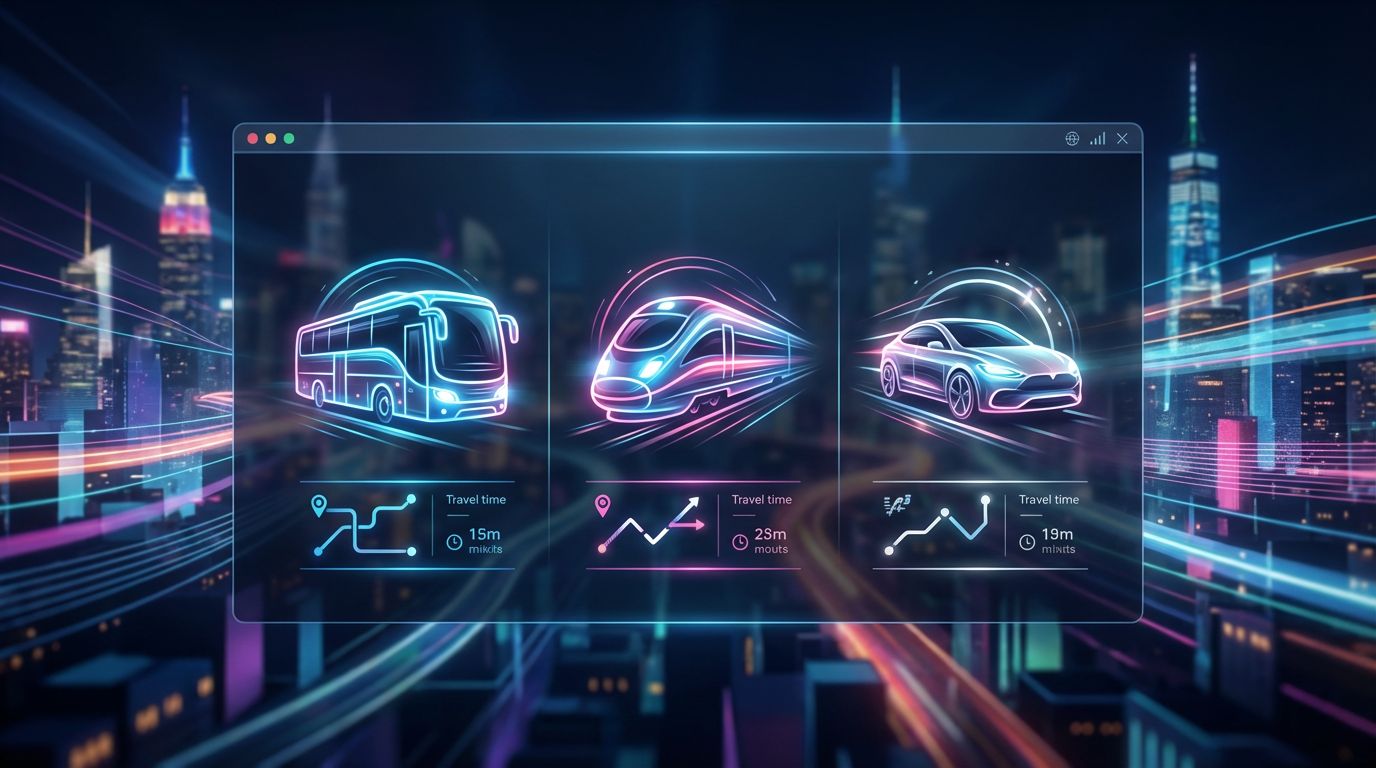
If your transportation strategy for any US city consists of opening Uber and calling a ride, you're spending more money than necessary and overlooking options that are sometimes faster, cheaper, or both. The mix of apps that makes sense depends on which city you're in, but there's a core set that covers most urban transportation needs, and knowing when to use each one can save you significant money and time over the course of a year.
Here's what's actually useful, organized by transportation type, with specific notes on where each option shines.
For rides: use both Uber and Lyft, every time
This has been said before but it bears repeating because most people don't actually do it: install both Uber and Lyft and check both apps before every ride. Price differences of 20 to 40 percent on the same route at the same time are common, especially during surge pricing periods, evening rush hours, or when one platform has more drivers available in your area than the other.
The app with more available drivers nearby will also tend to show more accurate ETAs. If Uber says 3 minutes and Lyft says 15, that's not just a service quality difference, it's telling you that Uber has a driver right around the corner while Lyft doesn't. In that situation, even if Lyft quotes a lower fare, the Uber ride gets you moving faster and may end up being cheaper due to shorter en-route time.
One feature that both apps offer but most people underuse is scheduled rides. Both Uber and Lyft let you book pickups up to 30 days in advance. For airport trips, early morning meetings, or any situation where you can't afford to wait through surge pricing, scheduling a ride locks in a price window and guarantees a driver will be assigned. The locked-in prices are sometimes slightly higher than off-peak rates but consistently lower than what you'd pay booking at peak demand.
For airport pickups specifically, check both apps as your plane is landing. Airport ride queues behave differently from regular city pickups, and pricing can fluctuate by $10 to $20 within a few minutes as waves of passengers land and request rides simultaneously.
For public transit: Google Maps and the Transit app
Google Maps handles public transit directions for every major US city and many smaller ones. For most trips, it's good enough. It shows real-time arrival data for buses and trains on many transit systems, provides walking directions to and from stops, and combines transit with walking or biking segments when that's the fastest route.
The Transit app goes further in cities where it has deep real-time data integration. In New York, Chicago, Los Angeles, Boston, Seattle, Washington DC, San Francisco, Philadelphia, and several other major metro areas, Transit shows live vehicle positions on a map. You can literally watch your bus approaching in real time rather than guessing based on schedule data, which is unreliable because buses are frequently late or bunched.
Transit also has a feature called "Go" that provides real-time navigation during your trip, telling you when to get off, when to transfer, and alerting you if your vehicle is delayed. Its "Get Me Somewhere" mode shows you multiple route options ranked by actual departure time, not scheduled time, which means it accounts for delays and cancellations that Google Maps might not reflect.
For cities with complex transit systems involving multiple train lines, bus networks, and transfers, having both Google Maps and Transit installed gives you two perspectives on the same trip. Google Maps is better for planning a route when you don't know the transit system. Transit is better for real-time navigation when you're already on the move and need to know exactly where your bus is.
Both apps are free and have no subscription requirement.
For bikes and scooters: city-specific options
Bike-share programs are available in most major US cities and are often the fastest way to travel one to three miles in a dense urban area. They bypass traffic entirely and eliminate the wait time that rideshare apps require.
In New York, Citi Bike is the primary bike-share system. It's operated by Lyft, so you can actually unlock bikes through the Lyft app if you already have it installed, or through the dedicated Citi Bike app. Single rides cost $4.49 for a 30-minute trip. Day passes are $19 for unlimited 30-minute rides within 24 hours. The annual membership at $219.99 makes individual rides significantly cheaper and is worth it for anyone who commutes by bike even a few times per week.
Chicago has Divvy, also operated by Lyft, with similar pricing. San Francisco has Bay Wheels. Washington DC has Capital Bikeshare. Most other major cities have a system run through Lyft's bike-share division or a local operator.
Electric scooters through Lime, Bird, Spin, and other operators are available in many cities, though coverage varies widely. Scooter pricing is typically $1 to unlock plus $0.25 to $0.39 per minute of riding. A 10-minute scooter ride costs about $3.50 to $5, which is cheaper than most rideshare trips for the same distance but more expensive than a bike-share ride.
The practical limit on bikes and scooters is weather and distance. In good weather for trips under three miles on relatively flat terrain, they're often the fastest and cheapest option. For longer distances, bad weather, or hilly terrain, they're less practical.
For parking: SpotHero and ParkWhiz
If you drive to any urban area where parking costs money, parking apps can save both time and cash by letting you reserve a garage spot before you arrive.
SpotHero is the largest parking reservation app in the US, covering most major cities and many secondary markets. You search by destination and time, browse available garages and lots sorted by price and distance, pay in advance, and show a barcode or QR code at the entrance. The savings compared to drive-up rates vary, with some garages offering identical pricing while others offer 30 to 50 percent discounts for reservations. The real value is partly the potential price savings and partly the guarantee that a spot is waiting for you, which eliminates circling the block for 20 minutes in a congested area.
ParkWhiz is a smaller competitor with stronger inventory in specific markets, particularly Chicago and some Northeast cities. If SpotHero doesn't have great options for your destination, check ParkWhiz as an alternative.
Both apps are free to download and only charge when you actually book a parking spot.
For intercity travel: trains and buses
Amtrak's app handles booking, mobile tickets, real-time status updates, and seat selection for train travel across the US. The app is more reliable than the website for booking and managing reservations.
Train travel makes practical sense primarily on the Northeast Corridor between Boston, New York, Philadelphia, and Washington DC, where Amtrak runs frequent service that's competitive with flying when you account for airport security and transit time on both ends. The Acela service covers Boston to DC in about 6.5 hours, while regional trains take about 8 hours for the same route at lower fares. For city pairs like New York to Philadelphia (1.5 hours) or New York to DC (3.5 hours), the train is often the fastest door-to-door option.
For intercity bus travel, FlixBus and Greyhound are the two major operators. FlixBus tends to have lower fares and a cleaner app experience. Greyhound has the widest route network. For trips under five hours between major cities, buses are frequently the cheapest option, sometimes dramatically so, with fares as low as $10 to $20 for routes that would cost $100 or more to fly.
For route planning across modes: Rome2Rio and Moovit
Rome2Rio is an underrated app for longer trip planning. Enter any two locations in the US and it shows you every realistic combination of transportation: driving, bus, train, flight, and ferry, with estimated costs and travel times for each option. It's particularly useful for trips between mid-size cities where the fastest or cheapest option isn't obvious.
Moovit is another strong option for multimodal transit planning, particularly in cities where it has deep integration with local transit agencies. It combines real-time transit data with bike-share, scooter, and rideshare options into a single interface, showing you the full range of ways to get between two points.
The setup that covers 90 percent of situations
For most people who live in or regularly visit US cities, the following combination of free apps covers the vast majority of transportation needs:
Google Maps for baseline navigation and transit directions in any city. Uber and Lyft, both installed, checked against each other before every ride. The Transit app for real-time bus and train tracking in cities with good coverage. SpotHero for parking reservations when driving into urban areas.
Everything beyond that set depends on your specific city and travel patterns. If you're in a bike-share city and the terrain works for you, add that app. If you take Amtrak regularly, keep it installed. If you travel between cities frequently, Rome2Rio is useful for comparing options you might not have considered.
The theme across all of these is the same: using multiple apps and comparing options before committing saves real money and time compared to defaulting to one tool for everything.
About the Author
Mariana Costa
Security researcher and tech journalist. Writes about app safety, social media platforms, and digital privacy.
Related Articles
Uber at US airports: how pickups actually work and what to expect
Using Uber at an airport should be simple, but the reality involves designated pickup zones, terminal-specific procedures, and timing decisions that c...
6 min read
Uber in Las Vegas: the Strip, airports, and what to actually expect
Las Vegas is a city with one of the most interesting rideshare situations in the US. The Strip and downtown are saturated with drivers at almost every...
6 min read
Uber and Lyft in Miami: what riders actually need to know
Miami is a city where rideshare is both extremely useful and occasionally maddening, depending on the time and location. On a Tuesday afternoon, getti...
6 min read