
Uber vs Lyft: which one is actually better in 2025?
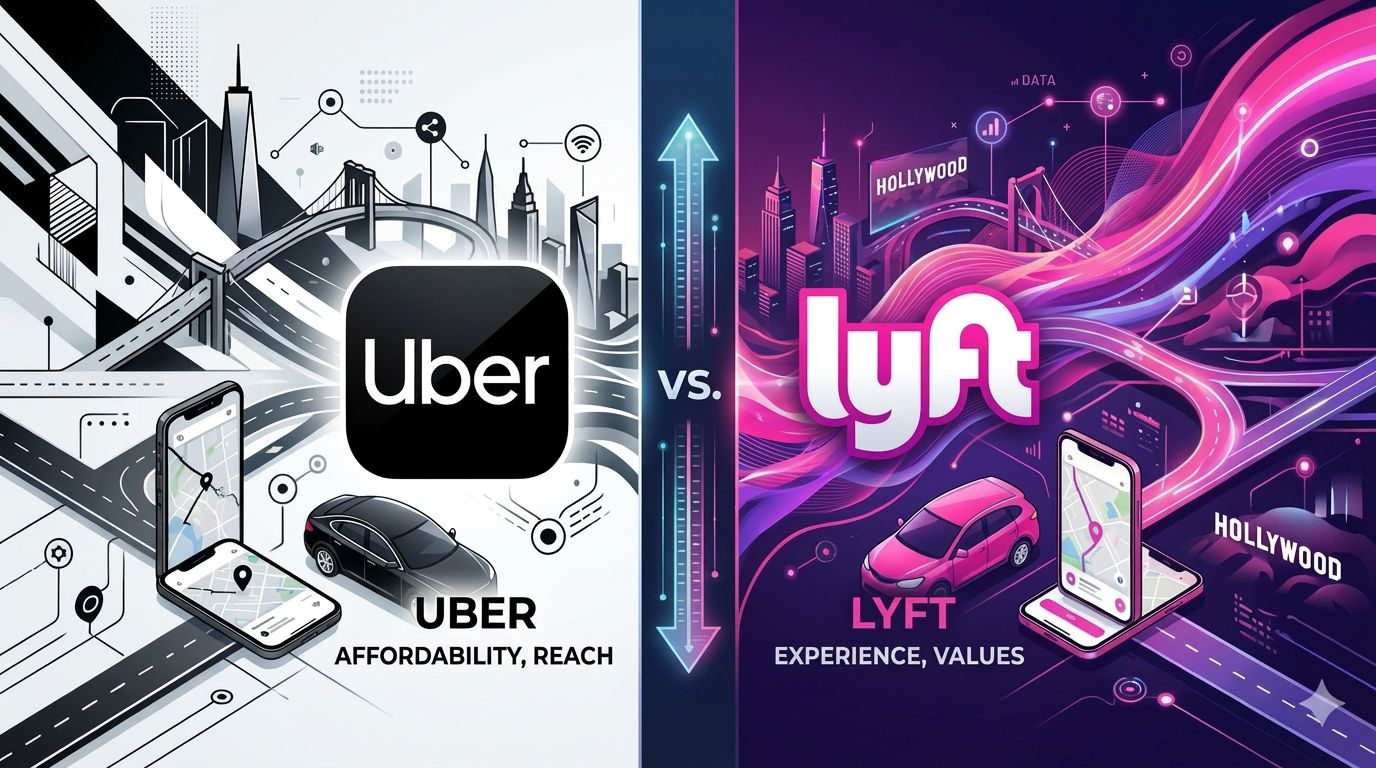
I've used both apps more times than I can count, in more cities than I can remember, and the honest answer is that neither one is clearly better in every situation. The right choice depends on where you live, when you're traveling, and whether you're willing to spend 30 seconds checking prices before you book. Most people pick one app out of habit and stick with it. That's a mistake that costs real money over time.
Here's a detailed comparison based on what actually matters when you're standing on a sidewalk trying to get somewhere.
The price question
Neither Uber nor Lyft is cheap anymore. The era of subsidized rides, when both companies were burning investor money to keep fares artificially low, ended around 2021. Surge pricing on both platforms has gotten more aggressive since then, and base fares have gone up across the board in most US markets.
That said, there are consistent patterns in how they price rides differently.
Lyft tends to run promotions more aggressively, especially for lapsed users. If you haven't opened the Lyft app in a couple of weeks, there's a decent chance you'll see a discount code or a reduced fare on your next ride. Lyft also runs periodic campaigns with percentage discounts for scheduling rides in advance or riding during off-peak hours.
Uber's pricing advantage comes through Uber One, their subscription at $9.99 per month. With Uber One you get 5% back on rides and free delivery on Uber Eats orders over $15. If you use either service more than twice a week, the subscription pays for itself in about two to three weeks. The key advantage here is that the discount applies consistently on every ride, not just promotional ones.
Lyft Pink exists as a competing subscription at the same price, but the perks are thinner. You get 5% off rides, priority airport pickup, and some partner discounts. It works, but the value proposition is weaker unless you fly frequently.
The practical advice that saves the most money is boring but effective: install both apps and check both prices before every ride. Differences of 20 to 40 percent on the same route are common, especially during peak hours or when one app has more available drivers nearby. This takes about 30 seconds and can save you five to ten dollars on a single trip.
Where Uber has a clear advantage
Coverage is the biggest one, and it's not close.
Uber operates in more than 10,000 cities worldwide, including extensive coverage across the United States in both major metros and smaller cities. Lyft is US and Canada only, and within the US, its coverage in smaller markets and suburban areas is noticeably thinner.
This matters less if you live in New York, Chicago, or Los Angeles, where both apps have deep driver pools. It matters enormously if you're in a mid-sized city, a suburban area, or traveling to somewhere you've never been. I've had multiple experiences landing in a city where Lyft showed a 25 to 30 minute wait while Uber had drivers three minutes away. That kind of availability gap becomes the deciding factor regardless of price.
Uber also offers more ride types. Depending on your city, you can choose UberX for standard rides, UberXL for larger groups, Uber Comfort for newer cars with extra legroom, Uber Black for premium sedans, Uber Pet if you're traveling with a dog, and several others. Lyft has a simpler lineup: standard, XL, Lux, and that's mostly it. The extra options on Uber matter when you have specific needs like transporting luggage, traveling with kids who need more space, or wanting a premium experience for a special occasion.
For airport rides specifically, Uber generally has shorter pickup times at major US airports because more drivers are signed up for the platform. When a hundred flights land within the same hour, the app with more available drivers wins by default.
Where Lyft actually does better
Lyft has a reputation for treating drivers somewhat better, and while that's become harder to verify as both companies have changed their policies repeatedly, many drivers who work both platforms still express a preference for Lyft. Driver morale might sound like an abstract concern, but it affects your experience directly. A driver who feels fairly compensated and respected by their platform tends to be friendlier, keep a cleaner car, and make better decisions behind the wheel.
The Lyft app itself is cleaner and easier to use. Uber has progressively cluttered its interface with restaurant delivery, grocery ordering, package delivery, and other services that have nothing to do with getting a ride. Finding the basic ride booking screen on Uber now requires navigating past promotions and service suggestions that you didn't ask for. Lyft does one thing, and its interface reflects that simplicity.
Lyft Rounds is a newer feature worth mentioning. It lets you schedule rides at slightly reduced prices if you're flexible on the exact departure time by five to ten minutes. This works well for commuters and regular trips where you don't need to leave at a precise minute. Uber doesn't have a direct equivalent, and the savings on Lyft Rounds are small but consistent enough to add up over time.
Lyft's referral program has also been consistently more generous than Uber's. If you're signing up for the first time, searching for a Lyft promo code before creating your account can get you meaningful discounts on your first several rides. Uber has similar first-ride promotions, but the amounts tend to be smaller.
Safety features compared
Both apps have invested in safety features following high-profile incidents on both platforms. The current safety toolkits are broadly similar, but there are differences worth knowing about.
Both offer real-time GPS tracking visible to riders, in-app emergency buttons that connect to 911 with your location pre-loaded, driver background checks, and the ability to share your trip status with a trusted contact.
Uber has an edge in one specific area: when you share your trip with someone, the recipient can view your real-time location through a web link without needing the Uber app installed. On Lyft, the person you're sharing with needs to have the Lyft app to see the real-time map. This is a small detail but it matters if you're sharing your location with a parent or partner who doesn't use rideshare apps.
Uber also offers an audio recording feature during rides in some markets, where both the rider and driver are notified that audio is being captured. This recording isn't accessible to either party during normal circumstances but can be reviewed by Uber's safety team if an incident is reported. Lyft doesn't currently have an equivalent feature.
Both platforms verify drivers through photo identification before each shift, and both have systems to flag erratic driving behavior based on GPS and accelerometer data. The differences in safety are relatively small, and choosing one app over the other for safety reasons alone doesn't make a strong case either way.
The practical recommendation
If you live in a major city and care primarily about saving money, install both apps, check both before every ride, and take whichever is cheaper. Subscribe to Uber One or Lyft Pink based on whichever you end up using more over the first month.
If you travel frequently, live in a smaller market, or want the most options for ride types, Uber is the safer default because of its wider coverage and deeper driver pool.
If you value a simpler app experience, prefer slightly better driver relations, and mostly ride in major cities where both apps have strong coverage, Lyft is a solid choice that will serve you well.
The people who commit to one app and never check the other are consistently overpaying. Both apps are free to install and take about 90 seconds to set up. There's no strategic advantage to loyalty here because neither company rewards it in any meaningful way. Price check every time, pick the better deal, and don't overthink it.
About the Author
Ana Rodrigues
Tech writer focused on mobile apps and digital services. Passionate about helping people find the right tools for everyday life.
Related Articles
UberX vs UberXL vs Uber Black vs Uber Comfort: which ride type should you choose?
When you open Uber and enter a destination, the app shows you a list of ride options rather than a single choice. For first-time users this can be con...
6 min read
Zoom vs Google Meet vs Microsoft Teams: which video call app is best?
The pandemic forced hundreds of millions of people onto video calls within a few weeks, and three platforms absorbed most of that demand. Years later,...
8 min read
TikTok vs Instagram Reels vs YouTube Shorts: which one is worth your time?
Short-form video has taken over three separate platforms that were originally built for completely different purposes. TikTok was designed around it f...
8 min read